


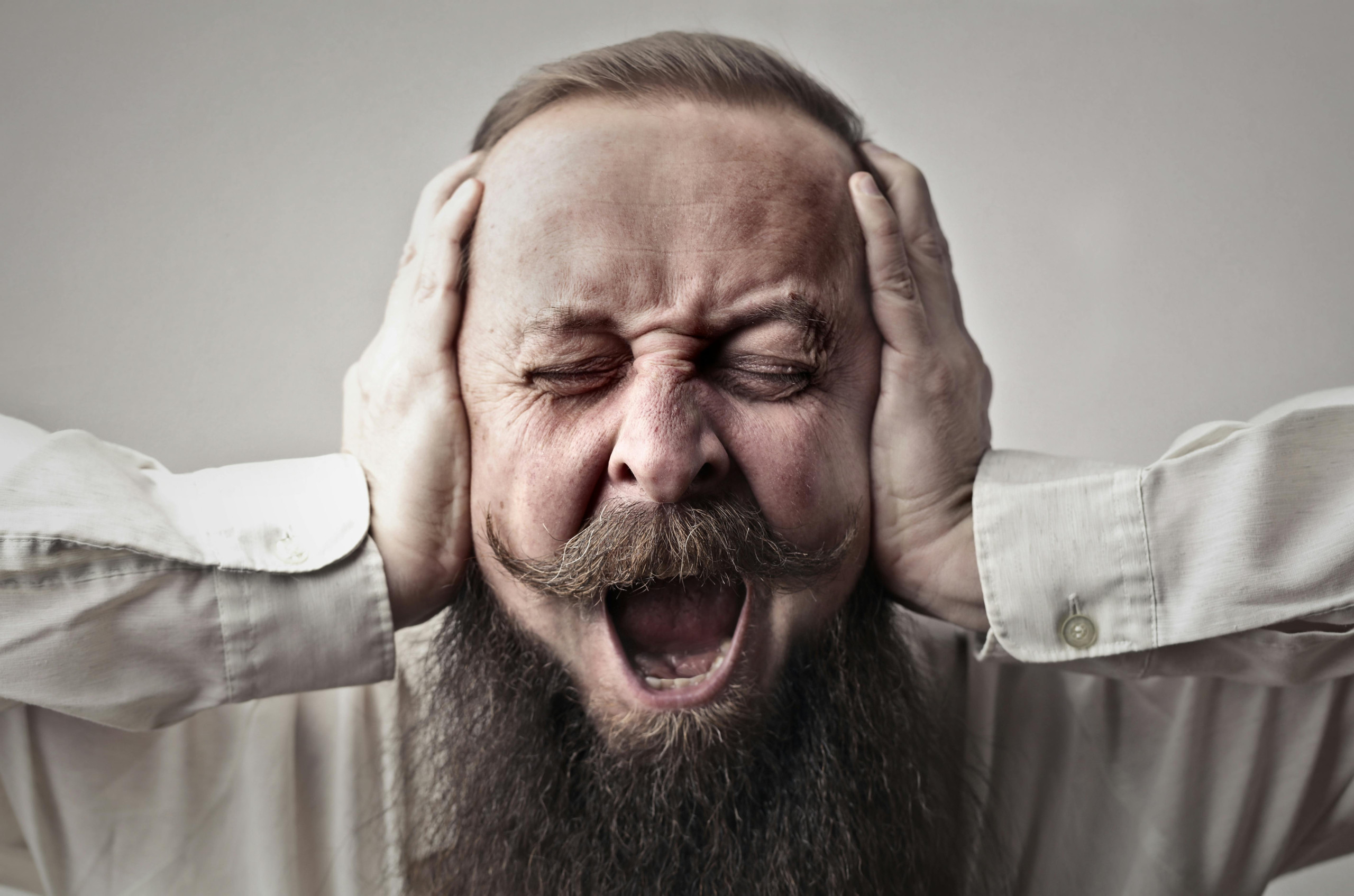
It started again. My upstairs neighbors were busy hanging pictures or building furniture. The noise wasn’t loud, but it still got to me. My apartment in central Berlin is well-built, but the sound found a way to reach me. Each tap made me feel tense.
What made it worse was the worry: When will they stop?
Even softer sounds started to bother me. I could hear a vacuum cleaner humming, footsteps above my ceiling, and a small dog barking for treats. Outside, leaf blowers and pressure washers joined in.
It’s not just simple irritation. For people like me, who are noise-sensitive, even small sounds can ruin our peace.
What is Noise Sensitivity?
If small noises bother you more than others, you might be noise-sensitive too. Studies say that 10% to 40% of people are like this.
Noise sensitivity is not the same as misophonia, where people hate specific sounds like chewing or tapping. It’s also different from hyperacusis, where sounds feel louder and painful.
Noise sensitivity is when any sound feels disturbing. It’s not about how loud the sound is; it’s about how you feel when you hear it.
Some think noise sensitivity is just being moody. But scientists found out that it comes from how the brain works. It’s real, not just a bad mood.
“It’s been one of those problems that doctors ignored,” said a brain scientist from Auckland University of Technology. “But now we see how much it hurts people’s lives.”
Daniel Shepherd
How Do You Know If You’re Noise Sensitive?

There’s no medical test for noise sensitivity. But you can take a quiz, like Weinstein’s Noise Sensitivity Scale. It asks if sounds like people whispering in a cinema or soft music while you work bother you. If your answers are “yes” to many questions, you might be noise-sensitive.
How Noise Sensitivity Affects Health
It’s not just about being annoyed. Noise sensitivity can harm your health.
When a sound bothers a noise-sensitive person, their body reacts. Their heart beats faster, and their blood pressure rises. This stress reaction is called fight-or-flight.
Sleep is also affected. A 2021 study in China followed 500 people for a week. They found that noise-sensitive people felt their sleep was poor, even when noise levels were low. They woke up feeling tired and moody.
Noise sensitivity also increases the risk of heart disease, diabetes, anxiety, and depression. In Wales, a study of 2,398 men showed that those sensitive to road noise had more mental health problems.
A 2023 survey in France found that people who lived near airports and were sensitive to aircraft noise felt their health was worse.
Why Do Some People React More to Noise?

The answer might be in the brain. Daniel Shepherd and Elvira Brattico, a brain researcher from Denmark, studied how noise-sensitive brains work.
For most people, the brain reacts strongly only to scary or loud sounds. But in noise-sensitive people, the brain reacts even to normal sounds.
This happens because a part of the brain called the medial geniculate nucleus doesn’t filter sounds well. For most people, this part blocks out unimportant sounds. But in noise-sensitive people, it doesn’t work as well.
During sleep, this problem continues. Most people’s brains create “spindles” (special brainwaves) to get used to sounds and sleep peacefully. But noise-sensitive people have fewer spindles, so sounds keep bothering them.
Is It in the Genes or the Environment?
A Finnish twin study found that noise sensitivity can run in families. Some people are born with it. But people who live in noisy places can also develop it over time.
Noise sensitivity is also common in people with anxiety, schizophrenia, autism, or brain injuries. For many, it stays with them for life.
“It’s very hard for noise-sensitive people to get used to sounds.” “They can’t block them out like others do.”
Stansfeld
What Can Be Done?
The best fix is to reduce noise at the source. City planners can build quiet courtyards, use noise-absorbing road materials, and create quiet zones in parks. Some cities in Belgium and France are already doing this by slowing traffic and promoting cycling.
But changes like these take time.
For now, noise-sensitive people have to protect themselves. They use earplugs, noise-cancelling headphones, and soundproofing in their homes. But even with these, soft sounds can still be annoying.
“Even quiet sounds can bother noise-sensitive people.”
Brattico
Therapy and Other Solutions

If noise makes you anxious, medications for anxiety can sometimes help. Cognitive Behavioural Therapy (CBT) is another good option. Stansfeld remembers helping a patient with CBT who learned to manage their reactions to noise.
Music therapy is also useful. A trained therapist can choose calm, soft music like piano or harp that helps the brain associate sound with peace.
When music is too much, art therapy is a quiet way to relax and handle emotions without sound.
My Way of Coping
For me, earplugs became my first line of defense. Then I used noise-cancelling headphones and played soft jazz. On really bad days, I wrapped a towel around my head for extra sound-blocking.
The world may not get quieter anytime soon, but I can still try to find peace in my own space.
