


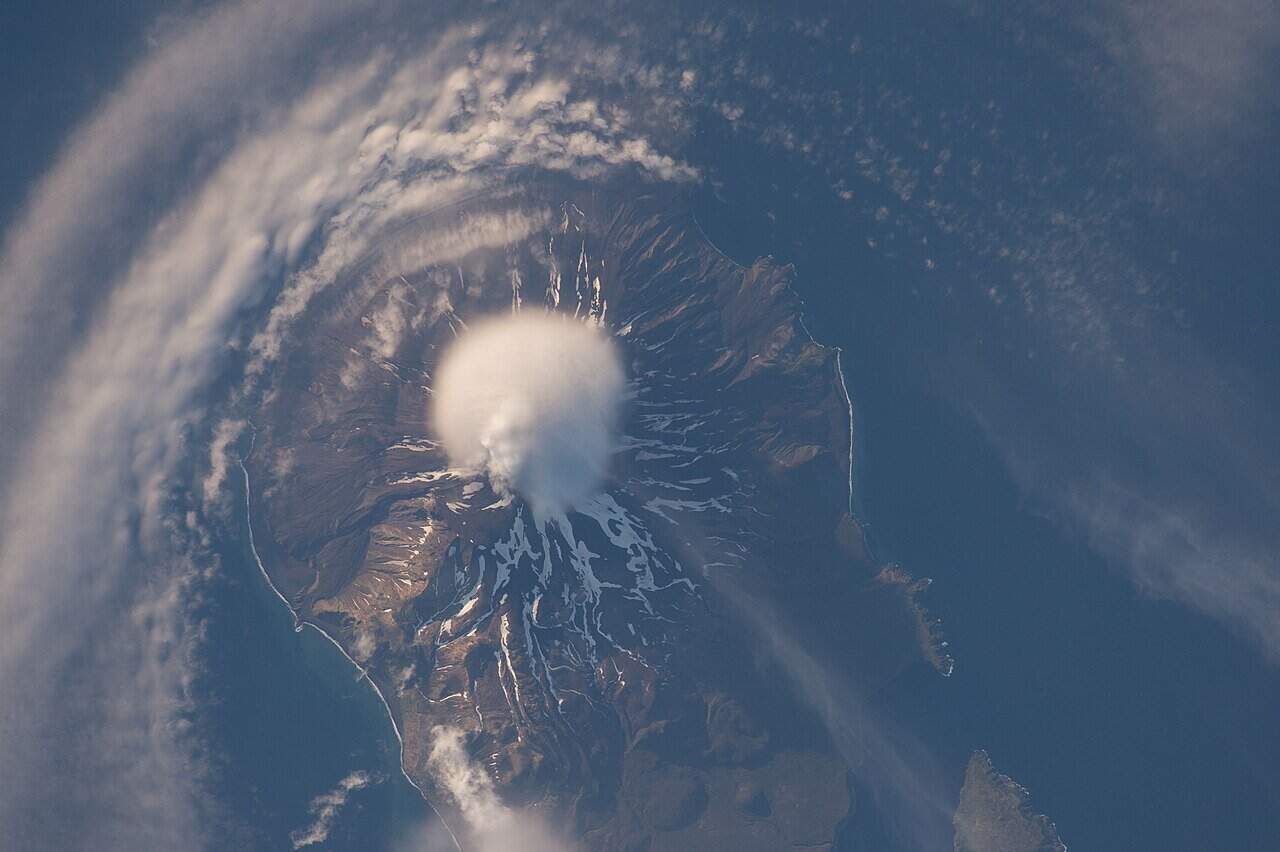
In the far-off lands of Russia’s eastern Kamchatka Peninsula, a quiet volcano has come back to life. Early today, the Krasheninnikov Volcano erupted for the first time in nearly 600 years, shooting a huge ash cloud into the sky.
Videos show the moment Russia’s Krasheninnikov Volcano in Kamchatka began erupting for the first time in 600 years. pic.twitter.com/ZY8sCIkMmF
— Al Jazeera English (@AJEnglish) August 3, 2025
This happened just days after a powerful 8.8-magnitude earthquake hit offshore, shaking the ground and setting off tsunami alerts around the world.
Local scientists say the ash cloud rose almost 6 km high and drifted east over the Pacific Ocean. No towns nearby were affected, and no ash reached places where people live.
Olga Girina, from the Kamchatka Volcanic Eruption Response Team, said this is the first confirmed eruption of Krasheninnikov in 600 years. Some records suggest it may have erupted between the 1400s and 1500s, but experts still debate the exact date.
Reports also say a smaller 7.0-magnitude earthquake happened during the eruption. It led to early tsunami warnings across Kamchatka. Authorities quickly canceled the alerts after finding there was little danger. Only small tsunami waves reached Japan and Alaska.
Something even more surprising happened next. Just hours later, Klyuchevskoy Volcano—Kamchatka’s most active one—also erupted. This hints that the earthquake may have shaken up more than one volcano in the area. Scientists say a strong quake can trigger eruptions if the magma is already close to the surface—like shaking a soda bottle and watching it fizz over.
🌋 ** WOW. Eurasia’s Largest Volcano Erupts After 8.7 Earthquake in Russia **
— Lenka White (@white_lenka) August 2, 2025
💥 FIRST recorded eruption since 1550 (460+ years)
Krasheninnikov’s ash cloud now 5–6KM high pic.twitter.com/wlRhuQiIMX
By evening, Krasheninnikov’s ash activity had slowed down. Aviation officials lowered the alert from red to orange, but they warned that more bursts could still happen.
This shows how nature’s forces are all linked. In the quiet Kronotsky Nature Reserve, where the eruption took place, scientists and staff are staying alert, watching for more quakes while the ash cloud floats harmlessly over the ocean.
It’s both scary and amazing to think a volcano can sleep for 600 years and wake up right after a huge earthquake. The story isn’t over yet. Experts say Kamchatka—with its 29 active volcanoes—still holds many secrets, and today’s eruption is just another part of Earth’s powerful story.
Image Source
View of Russia during ISS Expedition 44 by Earth Science and Remote Sensing Unit, NASA Johnson Space Center is in the public domain as it was created by NASA.
